Buyer decision sequence
From Logo Idea to Shipment Decision
Use this product page to confirm the first visual promise, proof path, and action trigger before sending a bulk RFQ.
At a glance Your logo on this product, with destination assumptions visible
Share quantity and destination such as Chicago, Germany, Saudi Arabia, or your target market. We review logo method, sample route, lead time, packing, and duty assumptions before quoting.
- MOQ reference: 20 pcs
- Visible price reference: USD0.99-USD9.99
- Standard covers sample faster; new patterns, multiple sizes, custom warning cards, or retail packaging add development time.
Proof checklist Proof points before bulk production
Logo durability check Confirm logo method, artwork proof, colour target, placement, and whether the decoration needs rub, wash, scratch, or handling checks.
Packaging drop-risk check Review polybag, gift box, insert, carton mark, master carton strength, and packed-unit photos before shipment release.
Customs document notes Prepare product description, material, invoice, packing list, HS code suggestion, and shipping term before landed-cost comparison.
Action trigger Ready when quantity, logo file, and destination are clear
Buyers usually ask for logo proof, packed-unit photos, MOQ by quantity tier, and shipping assumptions before confirming this type of custom product.
Request Express Quote Product Details
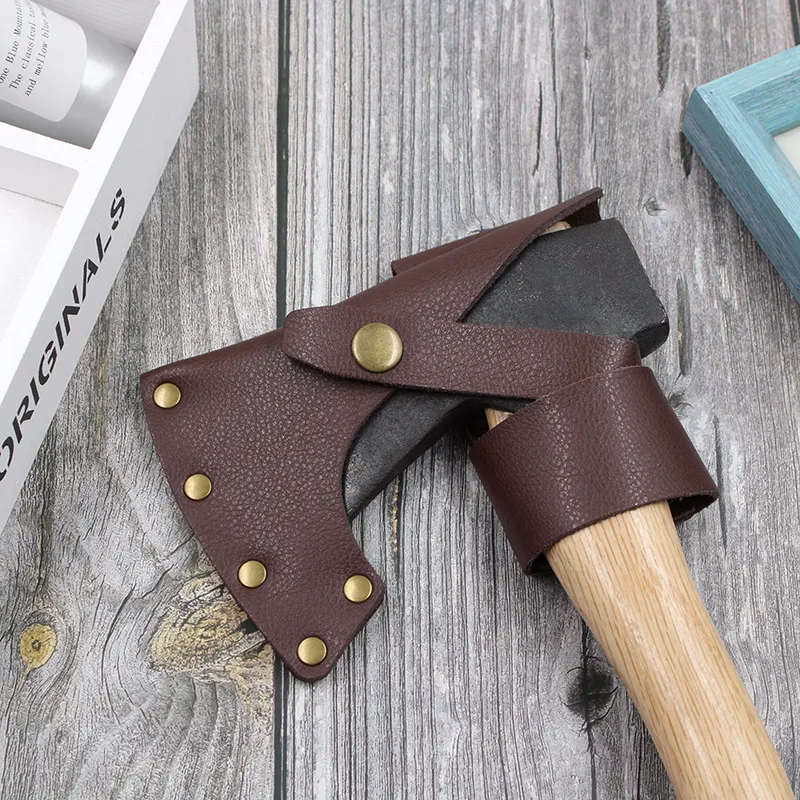
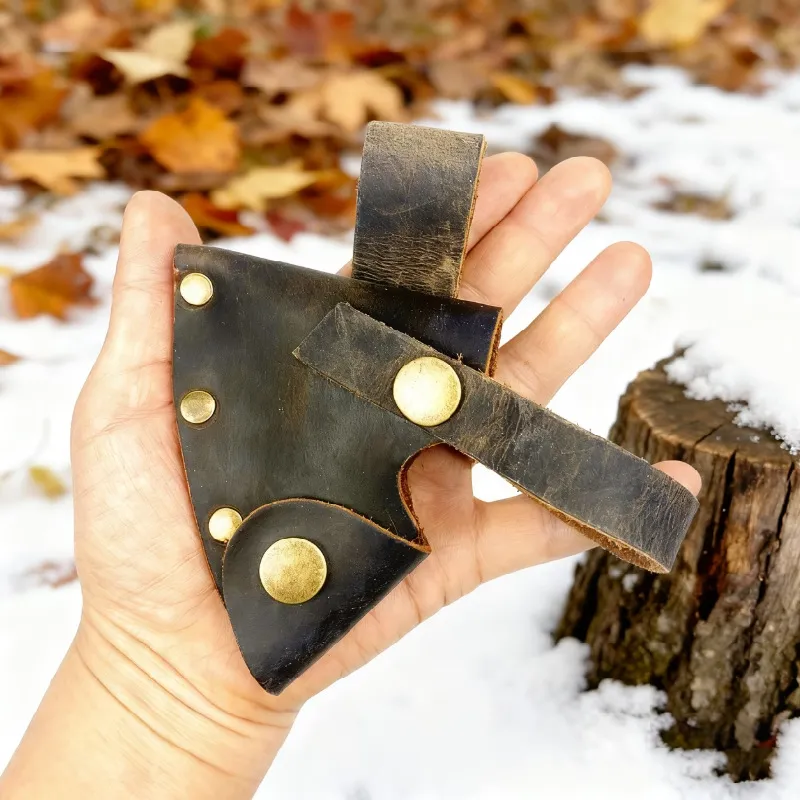
This custom leather axe head sheath with belt holster is built for B2B buyers sourcing outdoor accessories, camping gear, bushcraft products, hardware retail items, tool protection covers, and private label leather goods. This is not a hats page or a generic promotional product. The buyer needs to confirm axe head dimensions, blade coverage, leather thickness, closure security, belt attachment, and safety wording before asking for bulk pricing. For tool protection products, fit and retention are the main commercial issues. The RFQ should define the axe model or blade dimensions, sheath outline, leather type, thickness, snap or buckle structure, rivet position, belt loop width, edge finish, stitching color, logo method, packaging, order quantity, and destination country. Buyers should also state whether the item is for a specific axe, a universal retail accessory, a camping kit, a hardware store line, or a private label outdoor brand. Each scenario changes tolerance, labeling, and packaging needs. A universal sheath may need clearer size guidance, while a brand-specific sheath may require tighter pattern control. Customization can include debossed logo, laser engraving, stamped branding, woven label, metal rivets, custom snap finish, printed hang card, barcode sticker, warning card, polybag, retail sleeve, gift box, and carton marks. Branding should not reduce leather strength near stress points. If a logo is placed near the blade edge or closure area, sample testing should confirm that the mark does not crack, fade, or weaken the part during handling. Buyers should provide reference samples when possible because axe heads vary widely by market and model. MOQ and pricing depend on leather grade, thickness, pattern complexity, hardware, closure style, belt loop structure, logo process, packaging version, inspection standard, and quantity. A standard cover with existing leather and hardware can usually be sampled faster than a fully new holster pattern. If the buyer requires several sizes, retail warning cards, or special packaging for outdoor stores, those requirements should be quoted from the beginning. Adding them late may change material usage, labor time, and carton packing. Quality control should check blade coverage, fit tolerance, snap or buckle holding strength, rivet security, stitch density, leather surface, edge finish, logo accuracy, packaging count, warning label accuracy, and carton marks. Because the product is used with edged tools, safety language, retailer rules, destination-market labeling, and packaging claims should be reviewed before order approval. Material documentation and inspection photos can be requested before shipment. For on-page SEO, this page should support custom leather axe head sheath, axe sheath supplier China, leather axe holster wholesale, and private label outdoor tool accessories searches. The buyer path should move from tool fit to safe packaging: define blade size, approve pattern, choose leather and hardware, confirm branding, lock warning and retail packaging, inspect fit, and compare landed cost. This page should also help procurement teams avoid a common sourcing mistake: treating all axe covers as the same. A sheath with weak retention, thin leather, poor rivets, or unclear size labeling can create product returns and safety concerns. A useful supplier quote should include the target axe size, material thickness, closure type, logo process, package type, inspection checklist, sample timing, and shipping assumptions. That makes supplier comparison much more reliable for outdoor, camping, and hardware buyers. For procurement teams, the final comparison should include more than unit price. Ask each supplier to state whether blade dimensions, pattern tolerance, leather thickness, closure hardware, belt loop width, warning card, package artwork, carton quantity, inspection method, and shipping assumption are included in the quote. If the sheath will be reordered, keep the approved pattern and safety wording fixed so later batches match the first approved sample.
Buyer Problem
Buyers need a protective tool cover that fits the target axe, holds securely, carries branding cleanly, and can be sold through camping, hardware, or outdoor retail channels.
Best For
Outdoor brands, camping gear retailers, bushcraft suppliers, hardware stores, tool protection programs, and private label leather accessory lines.
Material Notes
Leather thickness, blade coverage, closure hardware, rivets, edge finishing, and belt loop width should be reviewed before sample approval.
Customization Options
Debossed logo, laser engraving, stamped branding, metal rivets, custom snap finish, warning cards, hang cards, barcode stickers, retail sleeves, and carton marks.
MOQ Notes
MOQ depends on leather grade, pattern size, hardware, logo process, packaging version, inspection requirements, and size count.
Lead Time Notes
Standard covers sample faster; new patterns, multiple sizes, custom warning cards, or retail packaging add development time.
Quality Control
Check blade coverage, fit tolerance, snap or buckle strength, rivet security, stitching, edge finish, logo accuracy, warning labels, and carton marks.
Compliance Notes
Because this is used with edged tools, confirm warning text, retailer rules, labeling, material documentation, and destination-market packaging claims before PO approval.